
Full-Arch Dental Implants in the South Hills of Pittsburgh
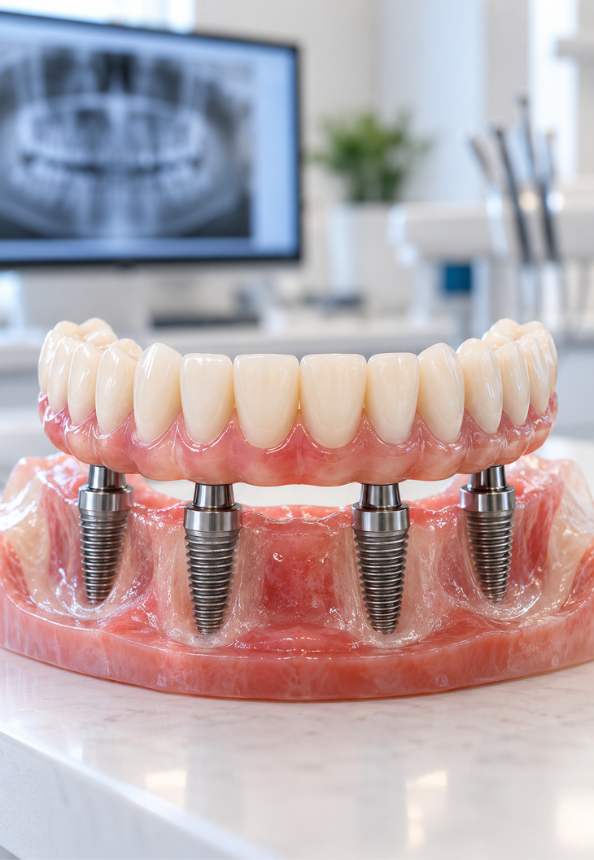
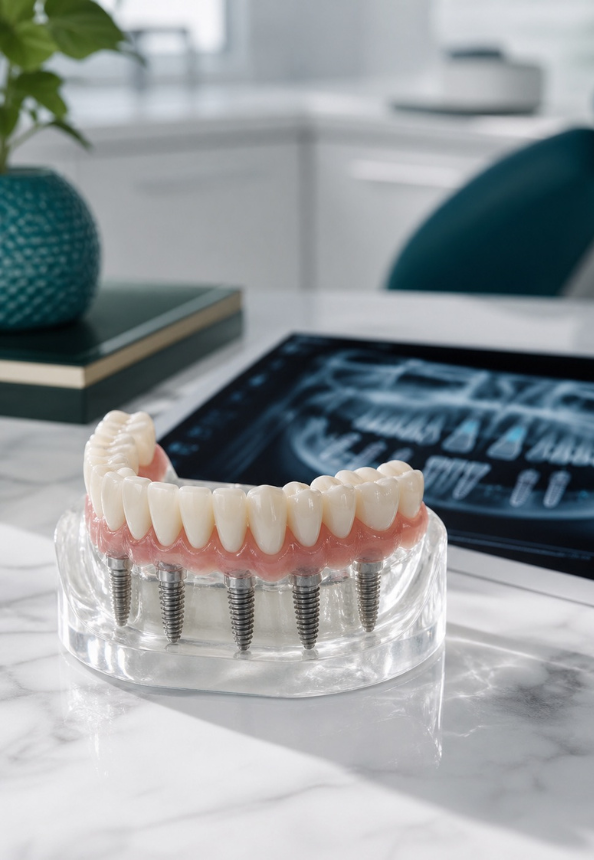
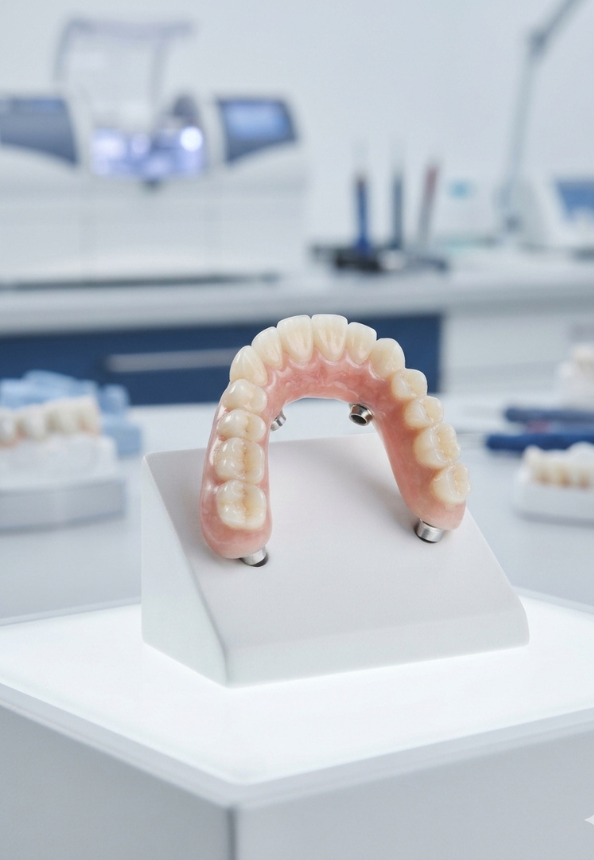
A full-arch implant bridge replaces every tooth in your upper or lower jaw with one fixed row of teeth. Four or more dental implants hold it in place. At Poling Family Dental Care in Whitehall, the standard fee is $25,795 per arch. That fee covers implant placement, the implant-supported bridge, the surgical guide, and anesthesia.
Fees shown are our standard fees. Actual cost may vary based on individual clinical needs and insurance participation.
Maybe your denture slips when you eat, or a dentist told you your last teeth can’t be saved. Either way, you likely want two answers before anything else. What will this cost, and who will do the work?
Dr. William Scott Poling answers both at your consultation. He has 20 years in practice and has trained in implant dentistry since 2013. He plans each case with 3D imaging, places the implants, and fits your final bridge, all in the same office. Nobody sends you across town to a second practice. Dr. Poling is a general dentist.
Call (412) 882-1320 to book a full-arch consultation. We are open Monday, Wednesday, and Friday, 7 a.m. to 5 p.m.
What is a full-arch implant bridge, and who needs one?
A full-arch implant bridge is one fixed set of teeth anchored to four or more implants in a single jaw. You do not take it out at night. Only your dentist removes it, for cleanings and checkups. It suits adults who have lost most or all of the teeth in one arch, or whose remaining teeth are failing from decay or gum disease.
An implant is a small titanium post that sits in the jawbone like a tooth root. Once the bone heals around it, the post can carry a lot of chewing force. A full-arch bridge spreads that force across several implants, so no single post does all the work.
People usually ask us about full-arch treatment when one of these is true:
- A full or partial denture moves, rubs sore spots, or makes eating hard
- Several teeth in one jaw are loose from advanced gum disease
- Large fillings and crowns keep breaking, and the teeth can’t support more repairs
- You want teeth that stay in, with no adhesive and no palate covering the roof of your mouth
Some patients only need one or two teeth replaced. If that is you, a single-tooth dental implant is likely the better fit. We cover that option on its own page.
How bone loss changes your options over time
Your jawbone keeps its shape because tooth roots press on it every time you chew. When you lose teeth, the bone in that spot starts to shrink, and most of that change happens in the first year. A denture rests on the gums, so it does not stop the shrinking. Implants press on the bone again, which helps keep the bone where they sit.
This matters for two reasons. First, a denture that fit well five years ago can feel loose today, because the ridge under it has changed. Second, the longer bone loss continues, the more likely you are to need a bone graft before implants can go in.
That does not mean you have run out of time. Dr. Poling performs bone grafting and sinus lifts in our office, and he can often rebuild enough support for implants. But a consultation sooner gives you more choices and usually a simpler plan.
Am I a candidate for full-arch implants?
If you are healthy enough to have a tooth pulled, Dr. Poling can usually evaluate you for full-arch implants. The deciding factors are the amount and quality of your jawbone, the health of your gums, and your general health. A 3D scan at your consultation shows Dr. Poling how much bone is available and where the implants can safely go.
You are more likely to be a good candidate if:
- You have had gum disease treated and it is stable
- Your blood sugar is well managed if you have diabetes
- You do not smoke, or you are willing to stop during healing
- You can keep up with daily cleaning and regular checkups
Some conditions and medicines slow bone healing. Bring a full list of your medications to the consultation. Dr. Poling reviews your health history before he recommends anything.
If the scan shows thin bone in the upper back jaw, a sinus lift can add height there. Dr. Poling also uses PRF, a gel made from a small sample of your own blood, to support healing after grafting. Dr. Poling explains and prices these steps before you agree to a plan.
How full-arch treatment works, step by step
Full-arch treatment usually takes 4 to 7 months from surgery to final bridge. Most of that time is quiet healing while the bone bonds to the implants. The exact timeline depends on whether you need teeth removed or bone added first. Dr. Poling gives you a written plan with each step before treatment starts.
Step 1: Consultation, exam, and imaging
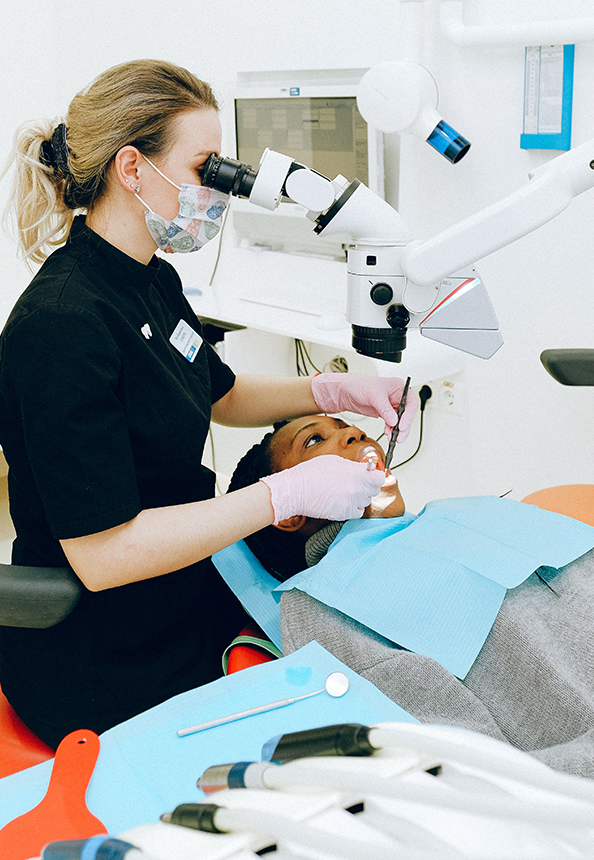
Your first visit is a comprehensive exam with a panoramic X-ray. Dr. Poling also uses 3D imaging to measure your bone in detail. He talks through what he sees, answers your questions, and explains whether full-arch implants make sense for you.
Step 2: Digital planning and your surgical guide
Dr. Poling plans the position of each implant on the 3D scan. From that plan, he has a surgical guide made. This is a custom template that fits over your jaw during surgery and directs each implant to the planned spot and angle. The full-arch fee includes the guide, so it never appears as a separate charge.
Step 3: Implant placement
On surgery day you are numb, and you can choose sedation if you are anxious. The fee includes anesthesia. Dr. Poling removes any failing teeth and places the implants through the guide. At your consultation, Dr. Poling explains what you will wear while the implants heal, so you know how you will eat and smile in the months ahead.
Step 4: Healing
Over the next 3 to 6 months, the bone grows tightly around each implant. Dentists call this process osseointegration, and it is what lets an implant carry chewing force. You will come in for short checks so Dr. Poling can watch how you are healing and adjust anything that feels uncomfortable.
Step 5: Your final bridge
Once the implants are stable, we take impressions of your mouth, usually with a digital scanner. Dr. Poling checks the fit and your bite before he attaches the final bridge.
How much do full-arch implants cost in Pittsburgh?
At Poling Family Dental Care, a full-arch implant bridge is $25,795 per arch. That single fee covers implant placement, the implant-supported bridge, the surgical guide, and anesthesia. We bill your new-patient consultation, a comprehensive exam and panoramic X-ray, separately at our normal fee. Treating both upper and lower jaws means two arch fees.
Fees shown are our standard fees. Actual cost may vary based on individual clinical needs and insurance participation.
The $25,795 fee covers:
- Placement of four or more implants in one arch
- The final implant-supported bridge for that arch
- The custom surgical guide
- Anesthesia for the procedure
Your new-patient exam and panoramic X-ray are billed on their own. If your plan needs any other step, Dr. Poling lists it and its fee in writing before you agree to treatment.
We participate with most PPO plans. Many PPO plans pay toward part of implant treatment up to the plan’s yearly maximum. Our team checks your benefits and tells you your share before you commit. If you would like to spread out payments, we work with CareCredit, Cherry, and Sunbit. Each lender sets its own terms after you apply.
How does a fixed bridge compare with a denture?
A fixed implant bridge stays in your mouth all the time. A snap-in implant denture clicks onto implants but comes out each night for cleaning. A regular denture rests on the gums and relies on suction or adhesive. The right choice depends on your bone, your budget, and how much you want the teeth to feel fixed in place.
|
|
Full-arch implant bridge
|
Snap-in implant denture
|
Regular denture
|
|---|---|---|---|
|
Removable by you
|
No
|
Yes
|
Yes
|
|
Held by
|
4 or more implants
|
2 or more implants
|
Suction or adhesive
|
|
Covers roof of mouth
|
No
|
Often less
|
Often less
|
|
Helps keep jawbone
|
Yes, where implants sit
|
Yes, where implants sit
|
No
|
|
Daily cleaning
|
In place, like teeth
|
Taken out and cleaned
|
Taken out and cleaned
|
Dr. Poling offers all three. If a fixed bridge is not right for you today, he will tell you why and what else might work. Some patients start with a snap-in implant denture and move to a fixed bridge later, because the implants placed for one can sometimes support the other. Ask about this at your consultation if budget is the main concern.
Why patients choose Poling Family Dental Care for full-arch implants
Full-arch treatment is a big decision, and you are trusting one team with several months of care. These are the specific things patients get at our Whitehall office. Each one is part of how our office handles full-arch care, or something you can see in writing before you agree to treatment.
One published fee with anesthesia included
You know the number before your first visit. The $25,795 per-arch fee includes anesthesia and the surgical guide, so those are not added at the end.
The same dentist from planning to final bridge
Dr. Poling plans the case, places the implants, and fits the bridge. You see the same face at every visit, and he already knows your history, your scans, and your goals.
Implant training since 2013
Dr. Poling completed implant training at the Triangle Dental Institute in Durham, North Carolina, in 2013. He also completed fellowship training with the International Congress of Oral Implantologists.
3D imaging and a guided surgery plan
Dr. Poling plans each full-arch case on a 3D scan. The surgical guide carries that plan into the procedure, implant by implant.
In-office IV sedation with a nurse anesthetist
IV sedation is given in our office by a nurse anesthetist, so your sedation has its own dedicated professional while Dr. Poling focuses on your implants.
How do you care for a full-arch bridge?
You clean a full-arch bridge every day, much like natural teeth. Brush twice a day and clean under the bridge with a water flosser or floss threader. Plan on professional cleanings and checkups as often as Dr. Poling recommends, usually every 3 to 6 months. If you grind your teeth at night, a custom nightguard protects the bridge.
Implants do not get cavities, but plaque can still infect the gums around them. That infection can cause bone loss around an implant. Regular cleanings let our hygienists clean spots you can’t reach at home. They use instruments made for implant surfaces, and Dr. Poling checks each implant and the bridge screws at those visits.
In the first week after surgery, expect soft foods and some swelling. Most people return to normal routines within a few days. We send you home with written aftercare instructions and a number to call with any concern.
Full-arch implant consultations in Whitehall and the South Hills
Poling Family Dental Care is at 300 Weyman Rd., Suite 260, Pittsburgh, PA 15236, in Whitehall. We see patients from Baldwin, Bethel Park, Pleasant Hills, Mt. Lebanon, Brentwood, and South Park. Our hours are Monday, Wednesday, and Friday, 7 a.m. to 5 p.m. Call (412) 882-1320 to book your consultation.
The practice has cared for South Hills patients since 1985. Dr. Poling bought it in 2020 and has run it as a single-dentist office since. Before dentistry, he served as a U.S. Navy hospital corpsman with the Fleet Marine Force during Operation Desert Storm. Our office is wheelchair accessible and has five treatment rooms, so surgery days and follow-up visits run on a set schedule.
If you have been living with a loose denture or failing teeth, you do not have to decide anything at the first visit. Come in, see your scan, and get a clear plan and price. Call Poling Family Dental Care at (412) 882-1320 to meet Dr. Poling.
Frequently asked questions
Is full-arch implant surgery painful?
Most patients say the first 3 to 5 days are the hardest, with swelling and soreness that over-the-counter pain relievers usually manage. During surgery you are numb, and anesthesia is included in the full-arch fee. If you are anxious, ask about oral or IV sedation. IV sedation in our office is given by our nurse anesthetist.
How many implants will I need for one arch?
Most full-arch bridges sit on four or more implants per arch. The exact number depends on how much bone you have and where it is. Dr. Poling decides this from your 3D scan, not from a set formula. Our fee covers the number of implants your plan calls for, so you will know the cost before surgery.
Can I get full-arch implants if I was told I don’t have enough bone?
Often, yes. Bone grafting can rebuild thin areas, and a sinus lift can add height in the upper back jaw. Dr. Poling performs both in our office. He may also use PRF, made from your own blood, to support healing. Your 3D scan shows what is possible, and any extra step is priced before you agree to it.