
Single Tooth Dental Implants in the South Hills of Pittsburgh
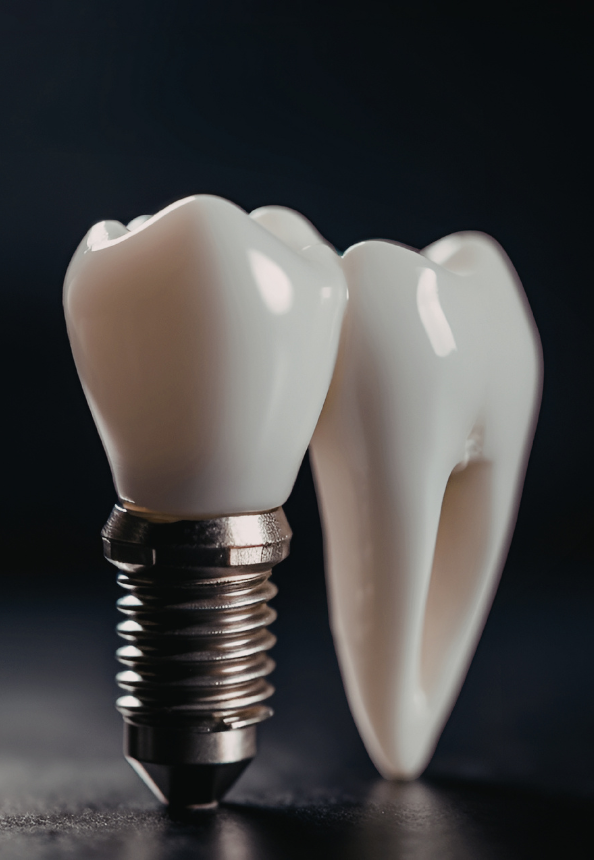
A single tooth dental implant replaces one missing tooth with a titanium post in the jaw and a crown on top. Your neighboring teeth stay untouched. At Poling Family Dental Care in Whitehall, our standard fee is $4,863. That fee covers the implant, the implant-supported crown, and the surgical guide used to place it.
Fees shown are our standard fees. Actual cost may vary based on individual clinical needs and insurance participation.
A gap where a tooth used to be is easy to put off. It may not hurt, and it may sit far enough back that nobody else notices it. But you may chew on one side now, or catch your tongue in the space, and you may wonder what treatment will really cost.
Dr. William Scott Poling gives you that number up front. He has 20 years in practice and has trained in implant dentistry since 2013. He plans your implant on a 3D scan, places it, and fits the crown himself. Dr. Poling is a general dentist.
Call (412) 882-1320 to book an implant consultation. We are open Monday, Wednesday, and Friday, 7 a.m. to 5 p.m.
What is a single tooth implant, and when do you need one?
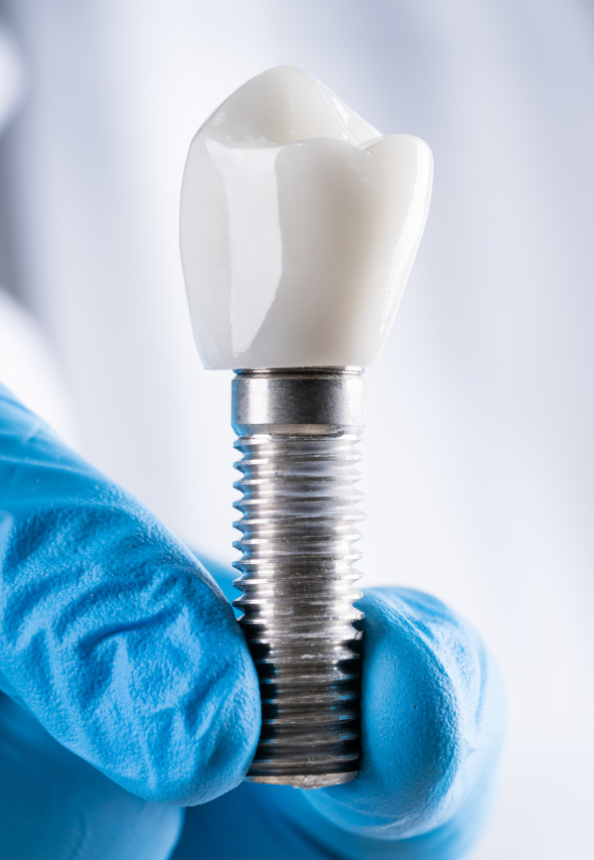
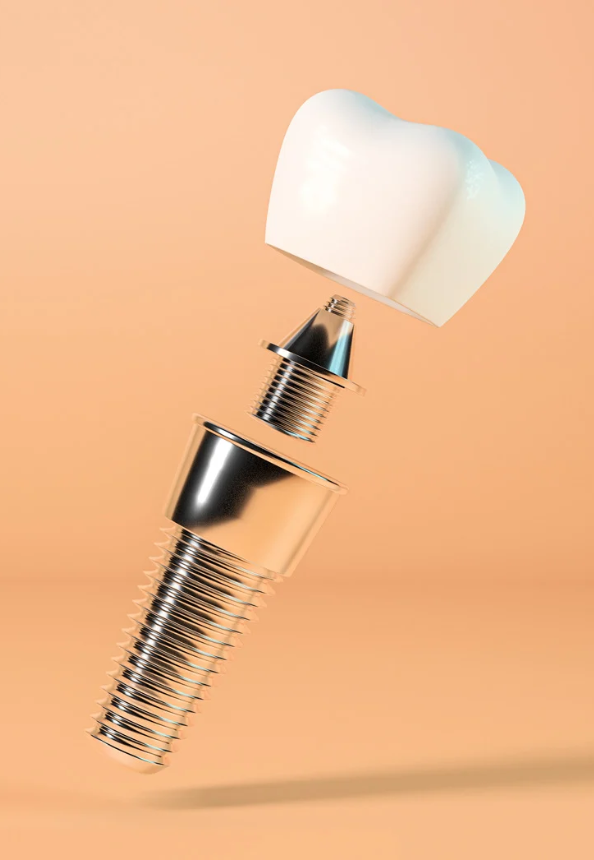
A single tooth implant has three parts. A titanium post sits in the jawbone where the root used to be. A small connector, called an abutment, attaches to the post. A crown shaped like your tooth sits on the abutment. Together they look and work like one tooth, and you clean them like your other teeth.
Implants make the most sense when you have healthy teeth on either side of the gap. A traditional bridge would require shaving down those teeth to hold a false tooth between them. An implant stands on its own, so your other teeth keep their enamel.
People usually come to us for a single implant after one of these:
- A tooth cracked below the gumline and had to come out
- A tooth with a past root canal failed and could not be saved
- A tooth was knocked out in a fall or sports injury
- A gap from an old extraction has bothered you for years
If you are missing several teeth in a row or a whole arch, other implant options may cost less per tooth. We cover full-arch dental implants on their own page, and our dental implants overview compares every implant option we offer.
What happens if you leave a gap?
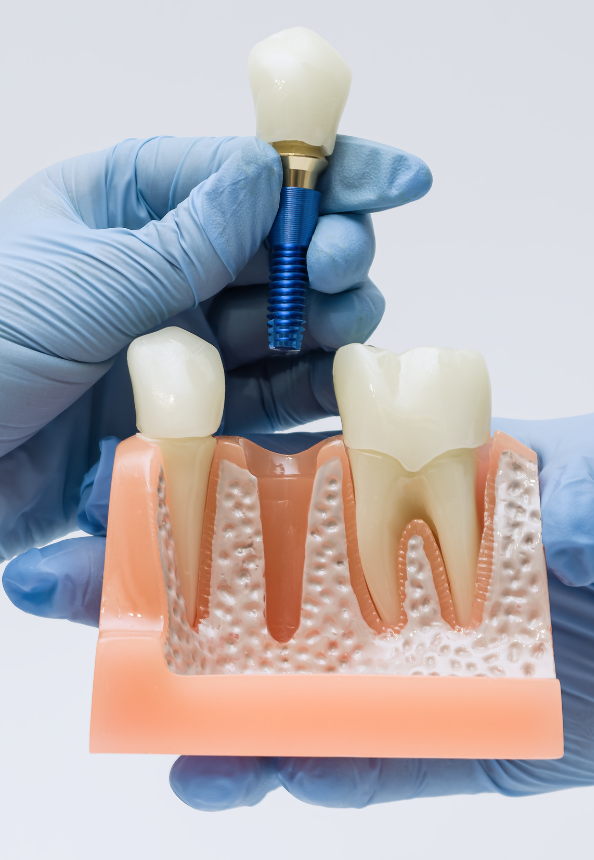
A gap rarely stays the same. The bone where the root used to be starts to shrink, and much of that loss happens in the first year. A 2003 study in the International Journal of Periodontics and Restorative Dentistry found the bone ridge lost about half its width in the 12 months after a back tooth was pulled.
The neighboring teeth gradually change position too. The teeth on each side can tip toward the space. The tooth above or below it has nothing to bite against, so it can slowly drift out of its socket. Those shifts can open new food traps and change how your teeth meet.
None of this happens overnight, and an older gap can often still take an implant. Sometimes it needs a bone graft first. Dr. Poling performs bone grafting in our office and checks your bone on a 3D scan at the first visit, so you will know where you stand.
Am I a candidate for a dental implant?
Most adults who are healthy enough for a routine tooth extraction can be evaluated for an implant. The main questions are whether you have enough healthy bone, whether your gums are healthy, and whether any health condition would slow healing. Dr. Poling answers those questions with an exam and 3D imaging at your consultation.
You are more likely to be a good candidate if:
- Your gums are healthy, or you have had gum disease treated
- Your diabetes, if you have it, is well managed
- You do not smoke, or you are willing to stop while you heal
- You can keep up with brushing, flossing, and regular checkups
Bring a list of your medicines to the consultation. Some prescriptions, such as certain osteoporosis medications, can affect how the jawbone heals after surgery. Dr. Poling reviews your health history before he recommends treatment, and he will tell you plainly if an implant is not the right choice.
How single implant treatment works, step by step
A single implant usually takes 4 to 7 months from placement to final crown. Most of that time is healing, and you will not be in the chair for most of it. The plan can run longer if the tooth needs to come out first or you need a bone graft. Dr. Poling gives you a written plan with each step before you start.
Step 1: Consultation and 3D imaging
Your first visit is a comprehensive exam with a panoramic X-ray. Dr. Poling adds 3D imaging to measure the bone at the gap. He explains what he sees and whether an implant fits your situation.
Step 2: Planning and the surgical guide
Dr. Poling plans the implant’s exact position on the 3D scan. He then has a surgical guide made from that plan. The guide fits over your teeth and directs the implant to the planned depth and angle. Your fee includes it.
Step 3: Placing the implant
You are numb for the procedure, and sedation is available if you are nervous. Dr. Poling places the implant through the guide. For one implant, the procedure itself often takes about an hour.
Step 4: Healing
Over 3 to 6 months, the jawbone grows tightly around the implant. Dentists call this process osseointegration. You come in for short checks during this time so Dr. Poling can confirm the implant is settling as planned.
Step 5: Your crown
We take impressions of your mouth, usually as digital scans with our Planmeca system. Dr. Poling checks the fit, the color match against your neighboring teeth, and your bite before he attaches the final crown.
How much does a single tooth implant cost in Pittsburgh?
A single tooth implant at Poling Family Dental Care is $4,863. That standard fee covers the implant, the implant-supported crown, and the surgical guide. We bill the new-patient consultation, a comprehensive exam and panoramic X-ray, separately at our normal fee. Dental insurance may cover part of that exam and X-ray.
Fees shown are our standard fees. Actual cost may vary based on individual clinical needs and insurance participation.
The $4,863 fee covers:
- The implant post placed in your jaw
- The crown that attaches to the implant
- The custom surgical guide
Your new-patient exam and panoramic X-ray are billed on their own. If your plan needs any other step, such as removing the tooth first, Dr. Poling lists it and its fee in writing before you agree to treatment.
The $4,863 figure is our standard fee before insurance. We participate with most PPO plans. If your plan is one of them, your plan’s contracted fee and benefits may change what you pay. Our team checks your coverage and tells you your share before treatment. For monthly payments, we work with CareCredit, Cherry, and Sunbit, and each lender sets its own terms.
How does an implant compare with a bridge or a partial?
An implant replaces one tooth without touching the teeth beside it. A traditional bridge uses the two neighboring teeth as supports, so those teeth get crowns. A removable partial clips onto nearby teeth and comes out at night. Each option can work. The right one depends on the health of the teeth around the gap and your bone.
|
|
Single implant
|
Traditional bridge
|
Removable partial
|
|---|---|---|---|
|
Changes neighboring teeth
|
No
|
Yes, both get crowns
|
Clasps rest on them
|
|
Removable by you
|
No
|
No
|
Yes
|
|
Helps keep jawbone
|
Yes
|
No
|
No
|
|
Cleaning
|
Brush and floss like a tooth
|
Floss threader under the false tooth
|
Taken out and cleaned
|
|
Typical time to finish
|
4 to 7 months
|
About 2 to 3 weeks
|
About 2 to 4 weeks
|
Dr. Poling offers all three. If your neighboring teeth already need crowns, a bridge can sometimes make more sense than an implant. He will walk you through the trade-offs for your mouth.
Why patients choose Poling Family Dental Care for a single implant
One implant is a smaller project than a full arch, but you still want to know who is doing it and what it will cost. These points describe exactly how Dr. Poling handles single implants at our Whitehall office. You can check each one at your consultation before you agree to anything.
A fee you can see before your first visit
The $4,863 fee is on this page. It includes the surgical guide, so the planning step is not an add-on.
One dentist places the implant and fits the crown
Many patients have one office place the implant and another make the crown. Here, Dr. Poling does both, so one person owns the result from start to finish.
Implant training since 2013
Dr. Poling completed implant training at the Triangle Dental Institute in Durham, North Carolina, in 2013. He also completed fellowship training with the International Congress of Oral Implantologists.
Digital scans for most impressions
In most cases, our Planmeca CAD/CAM system takes a digital scan of your teeth. Scans are quicker for most people and can help avoid the gagging that putty trays can cause. Some cases still need a traditional impression.
Sedation if you need it
If dental work makes you anxious, you can choose oral or IV sedation. IV sedation in our office is given by our nurse anesthetist.
How do you care for a dental implant?
You care for an implant the same way you care for a natural tooth. Brush twice a day and floss once a day around the crown. Keep your regular cleanings, usually every 6 months, or more often if Dr. Poling recommends it. Implants can’t get cavities, but the gum around them can get infected if plaque builds up there.
For the first few days after placement, eat soft foods and chew on the other side. Some swelling and soreness are normal and usually fades in 3 to 5 days. We give you written aftercare instructions and a number to call if anything feels wrong.
If you grind or clench your teeth at night, ask about a custom nightguard. Grinding puts heavy force on any crown, and a nightguard distributes that pressure evenly while you sleep. At each checkup, Dr. Poling looks at the gum around the implant and checks your bite on the crown.
Dental implant consultations in Whitehall and the South Hills
Whitehall. Patients come to us from Baldwin, Bethel Park, Pleasant Hills, Mt. Lebanon, Brentwood, and South Park. We are open Monday, Wednesday, and Friday, 7 a.m. to 5 p.m. Call (412) 882-1320 to book your implant consultation.
The practice has served the South Hills since 1985. Dr. Poling bought it in 2020 and is the only dentist here, so you see him at every implant visit. He served as a U.S. Navy hospital corpsman during Operation Desert Storm before he became a dentist. Our office is wheelchair accessible. For your first visit, bring your insurance card,a photo ID, and a list of your medicines.
A missing tooth is not an emergency, but it is easier to treat sooner rather than later. Come in, see your 3D scan, and leave with a clear plan and a clear price. Call Poling Family Dental Care at (412) 882-1320 to meet Dr. Poling.
Frequently asked questions
Does getting a dental implant hurt?
You are numb during placement, so most people feel pressure, not pain. Afterward, expect soreness for 3 to 5 days that over-the-counter pain relievers usually handle. Many patients say it felt easier than having the tooth pulled. If you are nervous, ask about oral or IV sedation. IV sedation in our office is given by our nurse anesthetist.
Can the implant go in the same day the tooth comes out?
Sometimes. If the bone around the socket is healthy and there is no infection, Dr. Poling may place the implant right after the extraction. If there is infection or too little bone, he lets the site heal first, often with a bone graft. Your 3D scan and exam decide which approach is safer for you.
Will my dental insurance pay for an implant?
It depends on your plan. Many PPO plans pay toward part of an implant, up to the plan’s yearly maximum, and some cover the exam and X-ray. We participate with most PPO plans, and our team checks your benefits before treatment. You will know your expected share before you agree to the plan.